1. Start with the right tank
The single most common goldfish mistake is starting too small. A fancy goldfish can reach 6–8 inches and a common or comet goldfish well over a foot, and every one of them produces a heavy bioload. As a working rule, plan for 20 gallons for the first fish and roughly 10 more for each additional goldfish, with a filter rated above your tank's volume. A long, wide footprint beats a tall one: goldfish need swimming length and surface area for oxygen exchange more than height.
Glass or acrylic, rimmed or rimless, sponge or canister — the choices pile up quickly. For a step-by-step breakdown of sizes, shapes, filtration, and what to budget for, read the best fish tank for goldfish before you buy anything.
2. Choose tank mates carefully
Goldfish prefer cooler water (roughly 65–72°F) than most tropical community fish, eat anything that fits in their mouth, and have long, tempting fins. That rules out bettas, most tetras, and anything nippy or heat-loving. Good company tends to be other goldfish of a similar body type, white cloud mountain minnows, dojo (weather) loaches, bristlenose plecos, and larger snails.
Body type matters too — a slow, round-bodied fancy will lose every meal to a fast single-tail comet. For a full list of compatible species and the ones to avoid, see what fish can live with goldfish in a tank.
3. Add plants that survive a goldfish
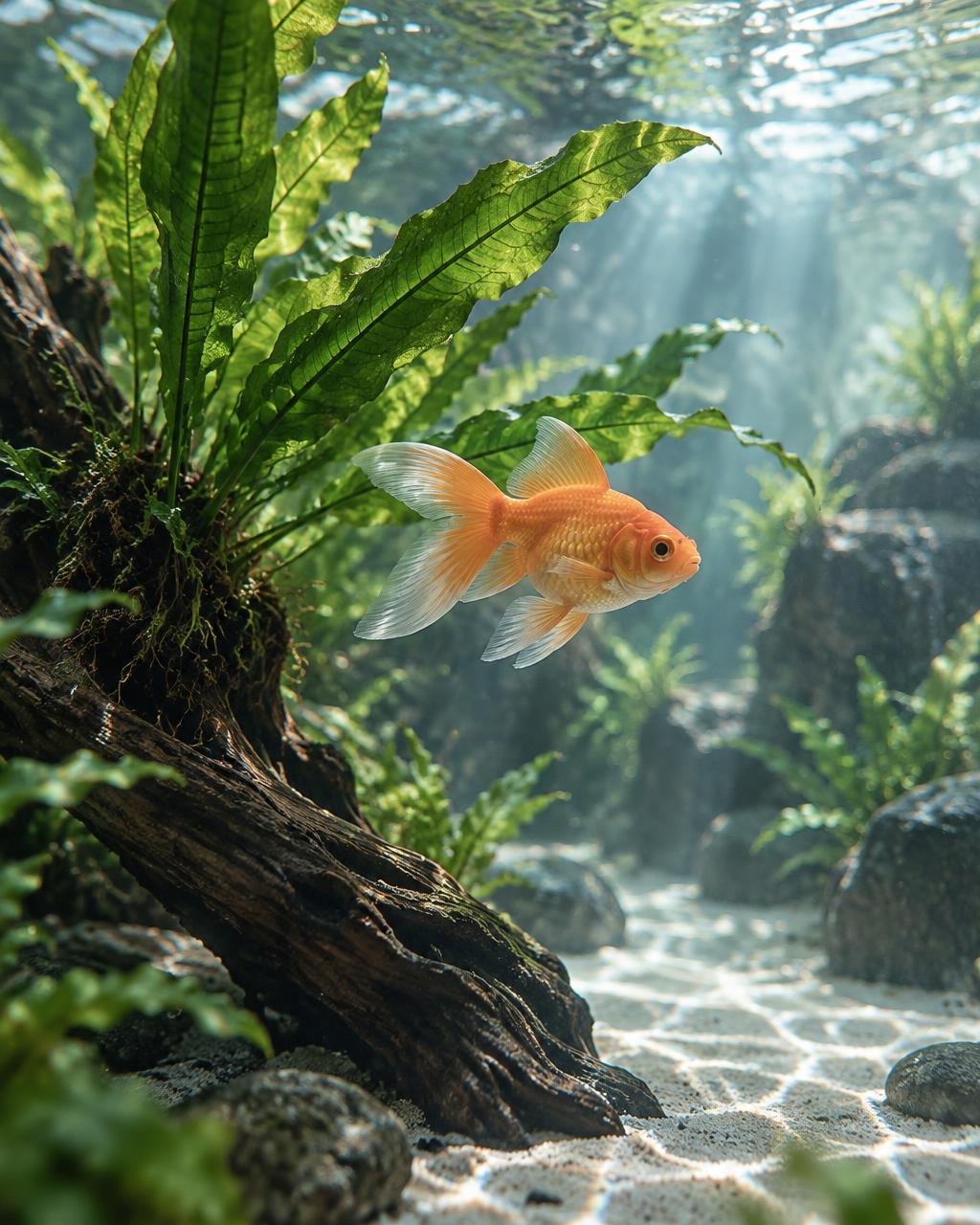
Goldfish uproot, dig, and graze, so delicate stem plants rarely last a week. Java fern is the classic exception: its leaves are tough and slightly bitter, it grows happily in low light and cool water, and it is tied to driftwood or rock instead of being buried — so there is nothing for a goldfish to dig up. Anubias, hornwort, and marimo moss balls round out a goldfish-proof planting.
Live plants also soak up nitrates between water changes, which a heavy bioload tank badly needs. To learn how to attach it, how fast it grows, and what to do if leaves turn brown, read is Java fern good for goldfish.
4. Learn to read behaviour
A healthy goldfish is a busy goldfish — cruising, sifting substrate, and begging at the glass. When one suddenly parks itself in a corner, treat it as a signal. New fish often hide for a few days while they settle. Beyond that, the usual culprits are an ammonia or nitrite spike, low oxygen, a temperature swing, bullying from a tank mate, or the first sign of illness such as swim-bladder trouble or parasites.
Test the water before anything else, then work through the checklist in why your goldfish is staying in the corner of the tank to tell harmless resting apart from a real problem.